Posts by Collection

grants

Grants and Funding

I have secured competitive funding from multiple institutions to support my research in Aegean archaeology, coastal landscapes, and prehistoric maritime interactions. My grants include substantial awards from the Swedish Research Council, Enboms donationsfond, and Magnus Bergvall Foundation, enabling projects such as Little Islandscape of the Saronic Project and Populating the Coastal Landscapes of Greece. Additionally, I have received travel and research stipends from the Axel W. Persson Foundation and the Swedish Institute at Athens, as well as full doctoral funding from Uppsala University. These grants have facilitated field surveys, GIS applications, and scholarly publications, furthering the study of seascapes and prehistoric coastal communities.

publications

Island Interactions: The Mycenaean Presence at Phylakopi on Melos in the Late Bronze Age. Unpublished MA thesis, University of Liverpool

Published in University of Liverpool, 2013

This MA thesis explores the nature and extent of Mycenaean influence at Phylakopi on Melos during the Late Bronze Age, focusing on cultural change and Aegean trade networks.

Recommended citation: Nuttall, C. (2013). Island Interactions. The Mycenaean Presence at Phylakopi on Melos in the Late Bronze Age, Unpublished MA thesis, University of Liverpool.

Friend or foe: Mycenaeanisation at Phylakopi on Melos in the Late Bronze Age

Published in Rosetta, Papers of the University of Birmingham 16, 2014

This paper addresses the stimulus and process(es) of cultural change on Melos during the Late Bronze Age, examining phases of foreign influence and Mycenaean interaction.

Recommended citation: Nuttall, C. (2014). “Friend or foe: Mycenaeanisation at Phylakopi on Melos in the Late Bronze Age”, Rosetta 16, 15–36.
Download Paper

Backs to the Sea? Least‑cost paths and coastality in the southern Early Bronze Age IIA Aegean

Published in Islands in Dialogue (ISLANDIA): Proceedings of the First International Postgraduate Conference in the Prehistory and Protohistory of the Mediterranean Islands, Roma: Artemide Edizioni, 2021

This study examines the spatial relationship between Early Bronze Age IIA settlements and the sea in the Southern Aegean, using least‑cost path analysis in GIS to quantify coastality.

Recommended citation: Nuttall, C. (2021b). “Backs to the Sea? Least‑cost paths and coastality in the southern Early Bronze Age IIA Aegean”, in G. Albertazzi, A. Saggio & G. Muti (eds.) Islands in Dialogue (ISLANDIA): Proceedings of the First International Postgraduate Conference in the Prehistory and Protohistory of the Mediterranean Islands, Roma: Artemide Edizioni, 116–129.
Download Paper

Seascape dialogues: human-sea interaction in the Aegean Late Neolithic to Late Bronze Age

Published in University of Uppsala Doctoral thesis, 2021

This PhD thesis investigates human-sea interactions in the Aegean from the Late Neolithic to the Late Bronze Age through spatial, material, and iconographic analyses.

Recommended citation: Nuttall, C. (2021a). *Seascape dialogues: human-sea interaction in the Aegean Late Neolithic to Late Bronze Age*. PhD thesis. Uppsala: Department of Archaeology and Ancient History, Uppsala University. ISBN: 978-91-506-2910-1 (print).
Download Paper

Ny forskning. Seascape dialogues. doktorsavhandling

Published in Medusa. Svensk tidskrift för antiken, 2022 (2), 2022

A brief overview of seascape dialogues and new research, as presented in Medusa. Svensk tidskrift för antiken, 2022 (2), 34–35.

Recommended citation: Nuttall, C. (2022). “Ny forskning. Seascape dialogues. doktorsavhandling”, Medusa. Svensk tidskrift för antiken, 2022 (2), 34–35.

Saroniska bukten genom tiderna

Published in Medusa. Svensk tidskrift för antiken, 2023 (2), 2023

Please make a request for this paper on the Publications page.

Recommended citation: Nuttall, C. (2023). “Saroniska bukten genom tiderna”, Medusa. Svensk tidskrift för antiken, 2023 (2), 27–30.

Necrogeography in Southwest Peloponnese: A GIS-based study of the spatial distribution of Bronze Age tumulus and tholos tombs in Messenia

Published in AURA, University of Athens Review 6, 2023

This article examines the complex relationship between mortuary landscapes and human activity in southwest Messenia during the Middle and Late Helladic periods, utilising GIS analyses to investigate the spatial distribution of tumuli and tholos tombs.

Recommended citation: Nuttall, C and Zikidi, Ch. (2023). “Necrogeography in Southwest Peloponnese. A GIS-based study of the spatial distribution of Bronze Age tumulus and tholos tombs in Messenia”, AURA, University of Athens Review 6, 69–97.
Download Paper

A GIS Analysis of Coastal Proximity with a Prehistoric Greek Case Study

Published in JCAA, Journal of Computer Applications in Archaeology 7(1), 2024

This study introduces and operationalises the concept of Coastal Proximity Analysis (CPA) to examine prehistoric settlement patterns in relation to coastal proximity on three Greek islands.

Recommended citation: Nuttall, C. (2024a). “A GIS Analysis of Coastal Proximity with a Prehistoric Greek Case Study”, JCAA, Journal of Computer Applications in Archaeology 7(1), 170–184.
Download Paper

Part VII. The Fishermen Vase

Published in Annual of the British School at Athens Supplementary Volume 53 , 2024

This paper examines the Fishermen Vase from Phylakopi—a unique example of Black and Red style pottery—inviting requests for access.

Recommended citation: Nuttall, C. and Theodoropoulou, K. (2024). “Part VII. The Fishermen Vase”, in R.L.N. Barber, Phylakopi, Melos, 1896-99: The Finds in the National Archaeological Museum, Athens, (BSA Supplementary Volume 53; London, 267–269.

Part X. Spouted inturned‐rim bowls (SIRB)

Published in Annual of the British School at Athens Supplementary Volume 53 , 2024

This study examines the typological and chronological sequence of spouted inturned‑rim bowls (SIRBs) from Phylakopi, providing insights into Cycladic ceramic development.

Recommended citation: Nuttall, C. and Theodoropoulou, K. (2024). “Part X. Spouted inturned‑rim bowls (SIRB)”, in R.L.N. Barber, Phylakopi, Melos, 1896‑99: The Finds in the National Archaeological Museum, Athens (BSA Supplementary Volume 53; London, 324–328).

In the Shadows of a Giant? A Spatial Analytical Method for Assessing Coastal Proximity using R: a Case-Study from the Bronze Age Saronic Gulf (Greece)

Published in Virtual Archaeology Review, 2024

This study explores the interrelation between settlement dynamics and coastal proximity during the Bronze Age in the Saronic Gulf using an innovative spatial analytical approach.

Recommended citation: Nuttall, C. (2024). “In the Shadows of a Giant? A Spatial Analytical Method for Assessing Coastal Proximity using R: a Case-Study from the Bronze Age Saronic Gulf (Greece)”. Virtual Archaeology Review, 31, 16–36.
Download Paper

Review of The Wider Island of Pelops. Studies on Prehistoric Aegean Pottery in Honour of Professor Christopher Mee

Published in Opuscula, Annual of the Swedish Institutes at Athens and Rome 17, 2024

This review examines The Wider Island of Pelops, focusing on prehistoric Aegean pottery in honour of Professor Christopher Mee.

Recommended citation: Nuttall, C. (2024e). “Review of The Wider Island of Pelops. Studies on Prehistoric Aegean Pottery in Honour of Professor Christopher Mee”, Opuscula, Annual of the Swedish Institutes at Athens and Rome 17, 261–263.
Download Paper

‘Sea brought onto Land’. Seascape Imagery in the Cycladic Pottery from Phylakopi (Melos) held in the National Archaeological Museum, Athens

Published in Annual of the British School at Athens 119, 2025

This study examines seascape depictions on pottery from the 1896–9 excavations at Phylakopi on Melos and held in the National Archaeological Museum of Athens, exploring shifting iconographic themes.

Recommended citation: Nuttall, C. (2024). ‘Sea brought onto Land’. Seascape Imagery in the Cycladic Pottery from Phylakopi (Melos) held in the National Archaeological Museum, Athens. BSA 119, 61–81.
Download Paper

Mycenaean roads in the Peloponnese, Greece: Least-cost path modelling using R and Movecost

Published in Journal of Archaeological Science, 184, 106414, 2025

Evaluates LCP methods and parameters with multiple DEMs to model Mycenaean road networks using R and Movecost.

Recommended citation: Nuttall, C., & Kovačević, J. (2025). Mycenaean roads in the Peloponnese, Greece: Least-cost path modelling using R and Movecost. Journal of Archaeological Science, 184, 106414. https://doi.org/10.1016/j.jas.2025.106414
Download Paper

research

Little Islandscapes of the Saronic Project

Little Islandscapes of the Saronic Project (Angistri, Greece)

Project Director (2024-present)

The Little Islandscapes of the Saronic Project (LISP) is a collaborative archaeological survey investigating human occupation and land-use strategies on small islands of the Saronic Gulf, Greece. As Project Director, responsibilities include setting the research aims and agenda, liaising with Greek archaeological authorities and the Swedish Institute at Athens to ensure fieldwork is conducted correctly, and overseeing the coordination of colleagues and the publication of field seasons.

LISP addresses a significant gap in research by focusing on the small islands and islets of the Saronic Gulf, collectively referred to as the Little Islandscape of the Saronic. Nestled between Attica and the eastern Peloponnese, and close to key historical centers, these islands have been largely overlooked in archaeological studies. This project represents an urgent effort to document and understand the historical significance of these islands before they are irreversibly altered by urbanization and expanding tourism infrastructure.

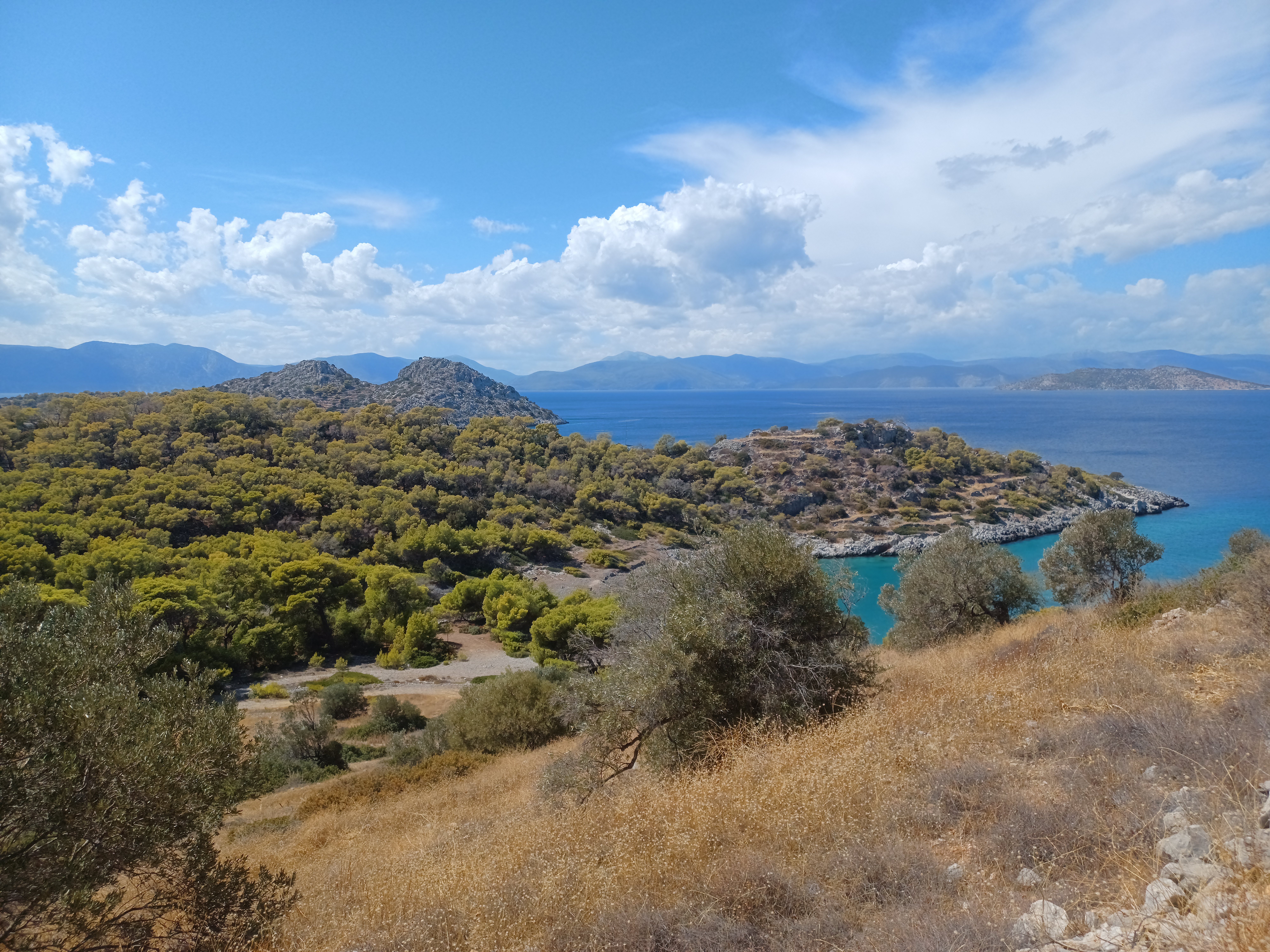
Anghistri Island
View over southern Anghistri towards Doroussa and Kyra.

This marks not only the first comprehensive archaeological study of these islands but also the first attempt to document their long-term history and cultural impact. At this stage, urban expansion and development have not yet made archaeological survey unfeasible, but a critical window of opportunity exists before ongoing changes irrevocably alter the material, cultural, and physical environment of this unique islandscape.

This project is currently underway, and publications will be submitted in due course.

Phylakopi Republication Project

British School at Athens Phylakopi Republication Project

Project Member (2013-2025)

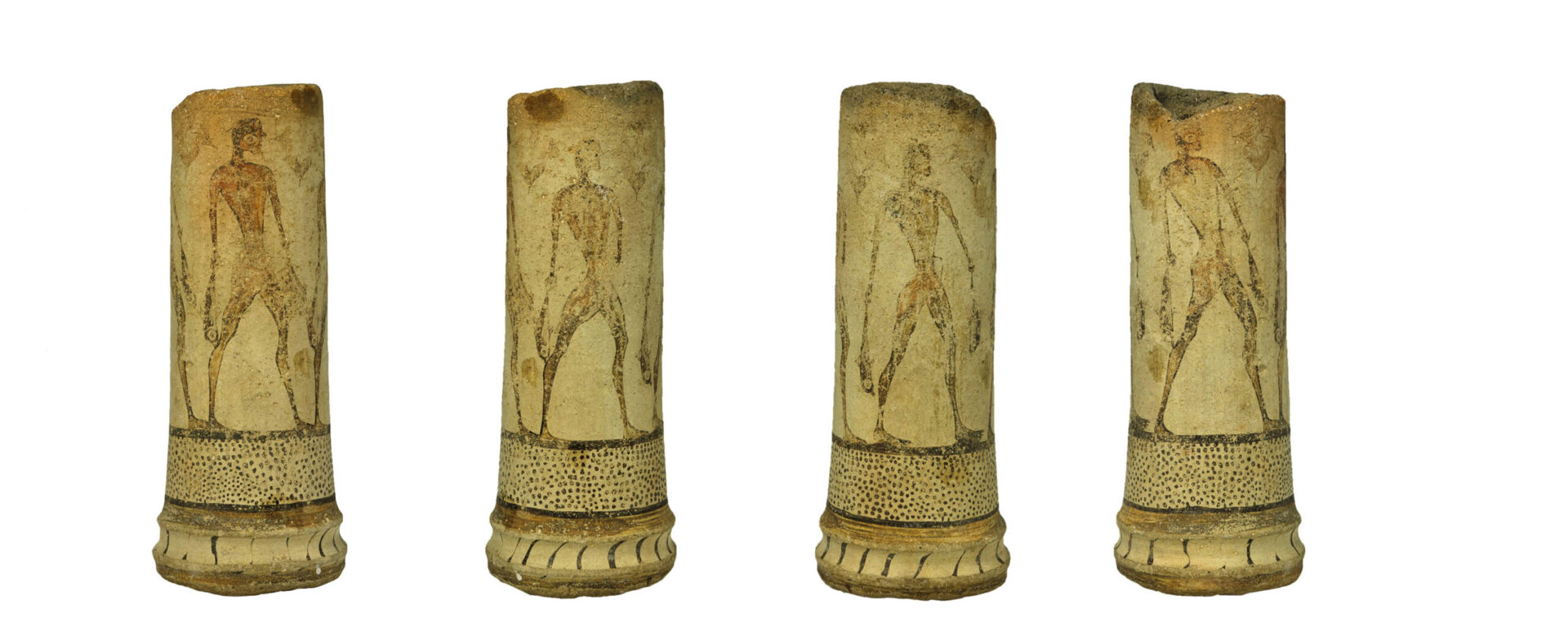
The project centred on a comprehensive re-study and publication of the archaeological material from the historically significant Bronze Age site of Phylakopi on Melos, originally excavated by the British School at Athens between 1896 and 1899. The recent work filled critical gaps left by earlier studies, providing detailed catalogues, scientific analyses (including petrography, chemical, and pXRF studies), and scale illustrations essential for modern archaeological comparison and interpretation. Within this broader framework, specific contributions included the publication of the inturned-rim bowls and, together with Kalliopi Theodoropoulou, the Fisherman Vase. Additionally, the role involved assisting in the broader material study of prehistoric ceramics, further clarifying Phylakopi’s technological connections to other Cycladic islands, Crete, and the Greek mainland.

The Fisherman Vase The Fisherman Vase from Phylakopi, Melos. Taken from URL
This research resulted in two peer-reviewed book chapters and one standalone peer-reviewed article.

  • Nuttall, C. & Theodoropoulou, K. 2024. “Part VII. The Fisherman Vase.”
    In R.L.N. Barber, Phylakopi, Melos, 1896–99: The Finds in the National Archaeological Museum, Athens (BSA Supplementary Volume 53; London), 267–9. URL

  • Nuttall, C. 2024. “Part X. Spouted Inturned-Rim Bowls (SIRB).”
    In R.L.N. Barber, Phylakopi, Melos, 1896–99: The Finds in the National Archaeological Museum, Athens (BSA Supplementary Volume 53; London), 324–8. URL

  • Nuttall, C. 2024. “Sea Brought onto Land: Seascape Imagery in the Cycladic Pottery from Phylakopi (Melos) Held in the National Archaeological Museum, Athens.”
    BSA 119, 61–81. DOI

Populating the Coastal Landscapes of Greece

Populating the Coastal Landscapes of Greece

Principal Investigator (2023-2025)

The Swedish Research Council-funded project Populating the Coastal Landscapes of Greece aimed to understand the nature and significance of human engagement with coastal landscapes (“coastscapes”) in later Greek prehistory (7000–1100 BCE). It employed a multidisciplinary approach combining spatial analysis, GIS methodologies, and archaeological data from extensive published fieldwalking surveys. The research specifically introduced novel spatial analytical frameworks such as “coastal proximity analysis” and the “coastal engagement index” to quantify and visualise coastal habitation patterns, spatial connectedness to the sea, and intensity of human activity over time.

By systematically analysing settlement data from over 110 surveys in central and southern Greece, the project sought to identify periods and regions of intensified or diminished coastal engagement and to clarify whether habitation near the coast was driven primarily by access to marine resources, trade networks, or other socio-economic factors. The outcomes include the development of methodologies broadly applicable beyond Greece, providing new insights into how prehistoric communities structured their lives around the opportunities and risks presented by coastal environments.

workshop

This research has so far supported four pieces of peer-reviewed work, as well as one workshop. In 2025, the datasets that supported the analysis will be uploaded project-by-project to GitHub.

  • Nuttall, C. 2024. “Review of The Wider Island of Pelops. Studies on Prehistoric Aegean Pottery in Honour of Professor Christopher Mee.” Opuscula, Annual of the Swedish Institutes at Athens and Rome 17, 261–263. DOI

  • Nuttall, C. 2024. “In the Shadows of a Giant? A Spatial Analytical Method for Assessing Coastal Proximity using R: a Case-Study from the Bronze Age Saronic Gulf (Greece).” Virtual Archaeology Review 31, 16–36. DOI

  • Nuttall, C. 2024. “A GIS Analysis of Coastal Proximity with a Prehistoric Greek Case Study.” Journal of Computer Applications in Archaeology 7(1), 170–184. DOI

  • Nuttall, C. & Zikidi, Ch. 2023. “Necrogeography in Southwest Peloponnese. A GIS-based study of the spatial distribution of Bronze Age tumulus and tholos tombs in Messenia.” AURA, University of Athens Review 6, 69–97. DOI

  • Nuttall, C. and Kovačević, J. 2025 (pre-print available). “Mycenaean Roads in the Peloponnese, Greece: Least-Cost Path Modelling Using R and Movecost”. Available at SSRN: URL DOI
  • Nuttall, C (ed.). Spatial Approaches to ancient Greek and Cypriot landscapes. Swedish Institute of Athens and Rome (Skrifter utgivna av Svenska institutet i Athen, 8˚).

Research Profile

I am currently a postdoctoral researcher based in Athens, Greece, at the Swedish Institute at Athens and the National and Kapodistrian University of Athens. My academic journey has consistently focused on the archaeology of prehistoric Greece and the Aegean, landscape archaeology, spatial analyses, and human-sea interactions. I have been particularly interested in how ancient populations interacted with their environments, especially coastal and island landscapes, using digital and archaeological methods to interpret past human behaviours and settlement patterns.

I earned my PhD from the University of Uppsala, Sweden, where my research employed a multi-variate and multi-scalar analysis of human-sea interactions on the Greek mainland, Aegean islands, and Crete from the Late Neolithic to the Late Bronze Age. Since then, my academic appointments have included roles as a Postdoctoral Research Fellow and Field Director on projects in Greece, where I’ve further expanded my work on islandscapes, maritime connectivity, human-sea interaction, and prehistoric ceramics.

Fieldwork & Research Projects

My research and fieldwork experience has included a series of postdoctoral and postgraduate projects, as well as fieldwork involving archaeological surveys and excavations in various regions of Greece, notably on Crete, the Peloponnese, the Cyclades, and Boiotia. I have collaborated with international teams and contributed to interdisciplinary studies on prehistoric Greece. My ongoing research integrates spatial technology, ceramic analysis, and archaeological field methods to build a nuanced understanding of past societies, environment-human interactions, and the complexities of prehistoric Aegean communities. Below are more specific descriptions of my research projects.

Friends (Previously Affiliated Projects)

Seascape Dialogues

Seascape Dialogues: Human-Sea Interaction in the Aegean from Late Neolithic to Late Bronze Age

Doctoral Researcher (2016-2021)

Seascape Dialogues investigated how prehistoric communities engaged with maritime environments across the Aegean between approximately 4800 and 1600 BCE. The study utilised GIS-based spatial analyses, marine faunal remains, material culture evidence, and marine-themed iconography to examine patterns of coastal settlement, subsistence strategies, and symbolic interactions with the sea. A key analytical concept was “coastality,” defined as the varying degrees of proximity and orientation of settlements towards coastal areas, which significantly shaped both practical and symbolic dimensions of human-sea relationships.

The analysis demonstrated considerable variability in maritime interactions across the region, influenced by local environmental conditions and cultural preferences. For example, on Crete, marine resources featured prominently in diets and material culture, particularly in later periods, whereas marine iconography was notably absent from contemporary sites on the Greek mainland. The research also identified how seascapes emerged through context-specific engagements, influencing community identities and social practices, such as the ritual use of marine shells and the depiction of marine life and maritime activities in art. Ultimately, the project underscored the dynamic and multifaceted roles that the sea played in shaping prehistoric Aegean societies.

thesis

This research resulted in one PhD monograph and one peer-reviewed book chapter.

  • Nuttall, C. 2021. Seascape Dialogues: Human-Sea Interaction in the Aegean Late Neolithic to Late Bronze Age. PhD thesis. Uppsala: Department of Archaeology and Ancient History, Uppsala University. DOI ISBN: 978-91-506-2910-1 (print)

  • Nuttall, C. 2021. “Backs to the Sea? Least-Cost Paths and Coastality in the Southern Early Bronze Age IIA Aegean.”
    In G. Albertazzi, A. Saggio & G. Muti (eds.), Islands in Dialogue (ISLANDIA): Proceedings of the First International Postgraduate Conference in the Prehistory and Protohistory of the Mediterranean Islands. Roma: Artemide Edizioni, 116–129. URL

talks

teaching

Teaching Experience

, , 1900

I have extensive experience teaching archaeology at undergraduate and graduate levels, emphasizing hands-on learning and interdisciplinary approaches. As course leader for From Troy to Mycenae at Uppsala University, I planned, wrote, delivered, and graded coursework, honing my ability to design comprehensive academic programs. I have led site tours at major archaeological locations across Greece, tutored GIS methodologies, co-directed field schools, and contributed to courses on Mediterranean colonization, all aimed at fostering critical thinking and engagement with archaeological research.